Behind the Science: A Conversation on The Nature Record with Dr. Sharon Collinge

Updated: Jul 16
Behind the Science: A Conversation on The Nature Record with Dr. Sharon Collinge
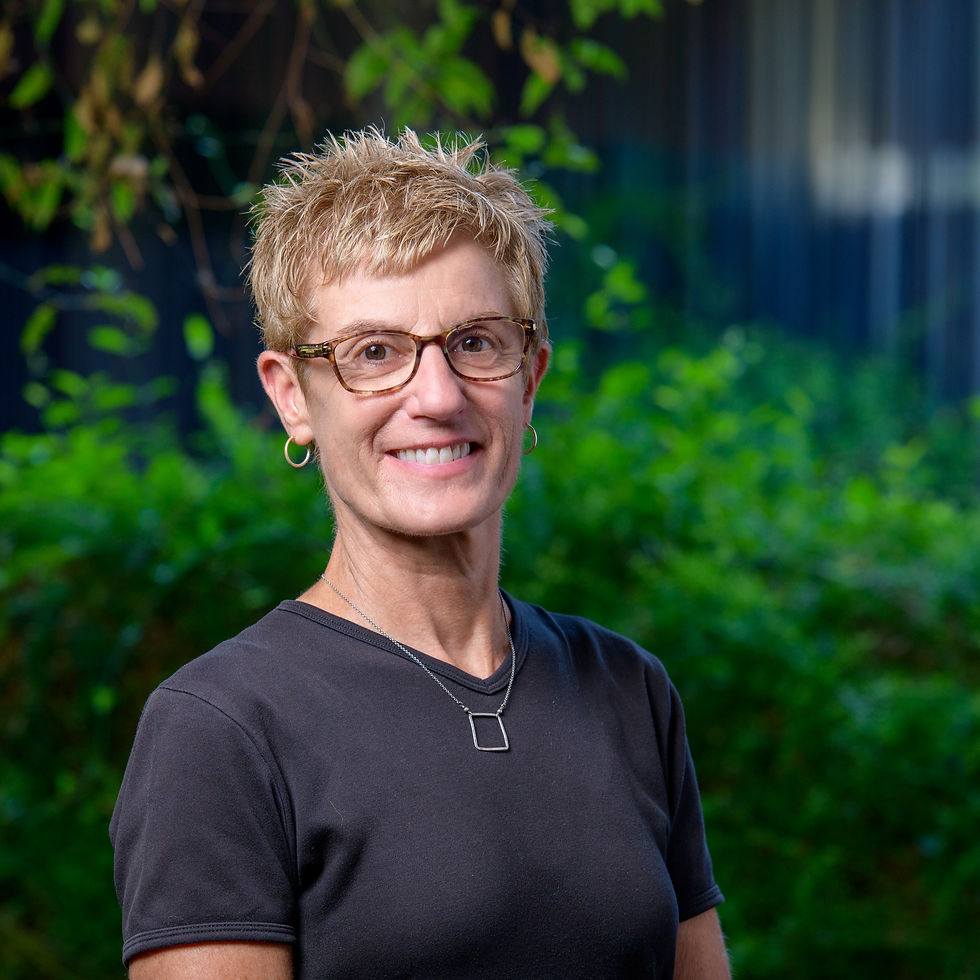
In preparation for our upcoming annual conference, Cristy Watkins, NSS Engagement Director sat down with Dr. Sharon Collinge—an ecologist, professor, and one of the lead authors for The Nature Record—to discuss the first-ever national assessment of ecosystems in the United States.
From its White House origins to collective efforts to highlight local "win-win" conservation efforts, to companion products like poetry books, this sweeping initiative is changing how we understand our relationship with the natural world here in the United States.
Check out the highlights from their conversation below, and catch Dr. Collinge and several Nature Record authors at the NSS annual conference (Aug 17-19), in their session, The Nature Record National Assessment: Understanding nature and connections to human wellbeing (Session 10A on Wednesday, August 19th).
Filling the Gaps in National Conservation
Cristy: The Nature Record describes itself as a living record of how nature shapes American life. What gaps in our national understanding does this body of work help fill?
Sharon: It fills a massive geographic and structural gap. While we’ve had regional and state-level assessments before, this is the first-ever national assessment of the U.S. and its territories to explicitly describe the status and trends of our ecosystems.
I am a lead author on the terrestrial ecosystems chapter, which serves as a companion to the marine and freshwater chapters. Together, these are part of a 15-chapter report detailing everything from the economic and health benefits of nature to how we can better provide benefits back to the environment. It’s a rigorous, credible look at our conservation declines as well as our brightest spots of ecosystem restoration.
Cristy: How did the Nature Record get started?
Sharon: The idea was proposed in the early 2020s by Jane Lubchenco and Heather Tallis while they were in the White House Office of Science and Technology Policy (OSTP). They wanted a nature assessment that ran parallel to the National Climate Assessment—a congressionally mandated report updated every five years. President Biden formally announced The Nature Record via an executive order on Earth Day in April 2022. The goal is for this to be an ongoing series, so we can also track how things change over time.
Scaling Up: From Local Ecology to National Data
Cristy: Your own research focuses on ground-level ecology, like habitat fragmentation and wildlife disease. How does that local focus shape how you view a sweeping national assessment?
Sharon: It has been intellectually exciting and deeply gratifying. Studying these dynamics at a fine scale gives me a deep appreciation for what the data actually means on the ground. Zooming out to the national scale allows you to see a beautiful, collective commonality in how species and ecosystems respond to human activity across places you may have never even visited.
Cristy: What is one finding from the terrestrial ecosystem research that surprised you?
Sharon: I was incredibly inspired by the sheer volume of collaborative conservation happening at local and regional scales. For example, Audubon started a conservation ranching program where ranchers can certify their beef as "bird-friendly" if they manage their grasslands to support bird populations. Our chapter alone combed through nearly 500 references of published literature and meta-analyses to paint this picture. The assessment leverages the best available science to synthesize these powerful, real-world examples.

Courage, Credibility, and Collective Action
Cristy: Our conference theme this year is Courage, Credibility, and Collective Action in Sustainability. How do you see The Nature Record speaking to those values?
Sharon: It perfectly embodies all three:
Courage: The initiative faced a bumpy ride regarding federal support, but leadership had the courage to press forward and secure private donor support to keep the work moving.
Credibility: This is strictly a non-partisan, non-advocacy document. It is a trusted source of information built on the most rigorous standards, incorporating peer-reviewed literature and local and Indigenous knowledge. It has been reviewed by the National Academies of Science, Engineering, and Medicine, and gone through multiple open public comment periods.
Collective Action: What happens next is up to us. The facts show that local communities can implement "win-win" actions—like urban tree-planting campaigns—that simultaneously benefit nature and improve human lives.
A Multidisciplinary Accomplishment
Cristy: This assessment pulls together hundreds of authors and invites public comment before it becomes finalized. What's it like conceptualizing and writing science this way — as an open, evolving and very interdisciplinary and cross-sectoral conversation?
Sharon: Well, it's really hard. And also super inspiring.
Each chapter has author teams of 14 or 15 people, and we've been combing the literature to find the examples and to synthesize the information for our chapter with these 14 other authors. That is a huge job, because this is all volunteer, and we're doing it on top of our full-time jobs.
We also needed to make sure we're coordinating across the other 14 chapters, that we are using the same language and the same vocabulary. We got to meet with all the other chapters and talk about where we saw commonalities, where we saw ways that we could refer to each other's work, and it was really successful. I was worried about it. I wasn't sure it would happen. And it happened just beautifully. But it was hard trying to coordinate and make this one coherent assessment, given all of the details that we have to consider.
"I had this moment at our recent all-author meeting—where over 100 of us gathered in person—and I realized we were doing this incredibly massive, historic thing together. I was just overwhelmed with gratitude and inspiration. It’s a pinnacle moment I know I’ll remember for the rest of my career."
Built for Longevity
Cristy: You explicitly built your author team to include a mix of veteran experts and early-career scientists.Why was that longevity important to you?
Sharon: I intentionally wanted at least a third of our 14-to-15-person team to be early-career scientists—including PhD students. Because this assessment is meant to be recreated, I wanted to ensure there was a passionate, capable group ready to carry this torch forward into the future.
Cristy: What is next for the assessment, and how is it reaching beyond the traditional scientific community?
Sharon: Our public comment period closed in May, and we are currently revising the chapters based on feedback from the National Academies. But The Nature Record is much broader than just a scientific report. There are incredible companion projects designed to engage the public, including a released volume of poetry inspired by the assessment and a youth art contest. It’s an open, evolving conversation with communities and across sectors.
The NSS Annual Conference
Join hundreds of cross-sectoral sustainability professionals as they share their work that champions evidence-based research, innovative and accessible solutions, and the persistence and preparation essential to building a hopeful and resilient future.
Inspiring plenaries, symposia, roundtables, posters, workshops, professional development courses, fun leisure activities, and networking opportunities await.
The conference will be hosted by Colorado State University's School of Sustainable Futures and the CSU Climate Hub at Spur.