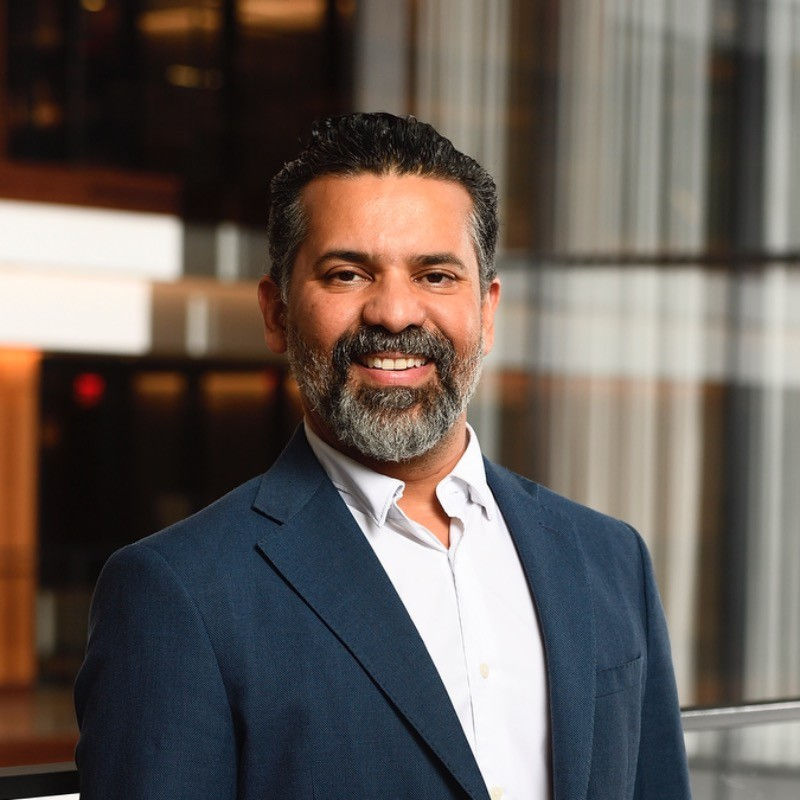
Brave Landscapes: Collective Planning at the City-Level for Climate Adaptation and Resiliency: An Interview with Jessica Andersen

Updated: Aug 5

Cristy Watkins spoke with Jessica Andersen, Urban Ecology Planning Supervisor with Denver Parks and Recreation about the progress made and lessons learned through collaboratively managing urban nature across the city of Denver.
Hear more from Jessica and her colleagues at the NSS Annual Conference in just a few weeks: Session 9D, Wednesday 9am: Brave Landscapes: Collective Planning at the City-Level for Climate Adaptation and Resiliency
Why this Work?
Jessica: A passion for connecting people to nature in the urban environment is what really drew me to this role.
“Many of our urban kids and urban families don’t always get that opportunity to leave the city.”
Many people in Denver, in the urban environment, feel like they're disconnected from nature. A lot of people move to Denver from other states because there's seemingly easy access to go up into the mountains, to go skiing, to go hiking. But many of our urban kids and urban families don't always get that opportunity to leave the city and go out even an hour into the mountains and get that access to nature. So it's critical that we can provide close-to-home, nearby nature so that they can go to their local park and feel this sense of being connected to the wildlife and the plants and the ecosystems that existed here before Denver became a city.

Cross-Agency Collaboration
Cristy: Your conference session emphasizes that climate adaptation can't happen in a vacuum. Assuming that departmental mandates and budgets differ, how do you shift that thinking, build a shared vision across agencies, and ensure that a comprehensive plan ultimately becomes something truly implementable?
Jessica: One of the big things we kicked off two years ago now was our Resilient Landscapes visioning process, and that brought together six of our different city departments and agencies to start this conversation. Each department was kind of working in a silo. We started to find out that we're all talking about similar things, we all have similar goals, and our city's comprehensive plan already had these goals laid out. But we didn't ever bring everyone to the table at the same time.
“If it’s not thought of together, it’s an afterthought that probably won’t happen.”
While urban canopy is a goal in our vision plan and our urban forest strategic plan, some of our transportation projects would just be very focused on the road only, or bike lanes, or pedestrian access. We know that in the urban environment we need that shade, we need those trees, and if it's not thought of together, it's an afterthought that probably won't happen. That layer of green infrastructure tied the pieces together. Our green infrastructure division wanted to do stormwater planters associated with transportation projects, and now we have a place to plant trees in those corridors. So we started to connect the dots across divisions.
It takes longer than you think. We're hitting those dissonance points of how do we implement some of these things, how do we enforce some of these things, do we have the staffing level to make this happen, do we have the operating budget to maintain some of these amenities, and what is that appetite of the community, and how much we can push on regulations.
Cristy: Do you have other cities, metro areas, or cities that you can look to for examples of either what to do or what not to do?
Jessica: We've tried to look at some comparable cities through our climate programs. We start by thinking of Denver’s unique climate, so we're trying to pinpoint what other cities have similar climates. Seattle and Portland are similar in size and demographics, but they don't have the same climate, so looking at what they do doesn't really make sense for Denver. We're looking at cities like Las Vegas, which are much drier than we are. Denver is the arid high plains, not desert, so that comparison doesn't quite fit either. Santa Fe and Albuquerque have a closer climate; Santa Fe especially has a very similar elevation. We're also looking at smaller cities in the Mountain West, and local neighboring jurisdictions. Castle Rock did some pretty significant landscaping regulations a few years ago, so they're a little ahead of us, and we can look at whether that was successful.
Cristy: Are planners across jurisdictions generally open to sharing this kind of information?
“Half of the battle is just knowing who to reach out to and then connecting with them. Taking advantage of conferences like this”
Jessica: For the most part, everyone is very open and wants to share. The hardest part is sometimes finding the right people to talk to. Half of the battle is just knowing who to reach out to and then connecting with them. Taking advantage of conferences like this. Last year the American Planning Association hosted their national conference in Denver, and that was a great cross-sharing networking opportunity.
Landscape Mandates and Community Buy-In
Cristy: How do you get community buy-in for new mandates around turf grass that support climate resiliency, but also might take away or shift the usage of that space?
Jessica: We already are seeing a lot of buy-in that the community understands the why behind this. We are in a pretty significant drought right now here in Colorado, and people are seeing how much water we use on our outdoor landscaping, and starting to understand those trade-offs. Water is a scarce and precious resource, especially in what we consider “non-functional turf”: areas that are purely there because they're aesthetically pleasing, a lot of our medians and parkways designed based on the City Beautiful movement, which made sense in Washington DC and the East Coast, but doesn't make sense here anymore because of our changing climate.
“They get the 'why,' but also feel such ownership for their parks and their lawns.”
Jessica: People really get it when it comes to regulating other people. It's when you get down to the context of, “we would like to change this in your neighborhood, in your park”, that's when they get very attached. This is where I walk my dog, this is where I go to the park. There is that dissonance between: we get the why, but they feel such ownership for their parks and their lawns. That's the tricky part we're in right now of balancing. From the parks' perspective, we are never going to remove our athletic fields, kids need the lawn, dogs need the lawn. We're being very cautious about only removing spaces that are purely non-functional and non-recreational.

We learned a lot from past projects. It takes a while for the grass seed to grow and establish and look like a native prairie, and we started getting comments from the community pretty quickly when it looked messy and it looked like it wasn't being mowed. People see this as neglect; why did you stop mowing this, why are you letting all these weeds grow? If we would have been a little more proactive and let the community know here's what we're doing and why, they very much would understand it. That sharp visual difference cued them in that something is wrong. So we learned our lesson there, and now we're trying to be much more proactive. Leaving a band of turf grass around it that gets mowed shows this cue to care; it shows the community that we're not just ignoring this, we didn't stop maintaining this, we're just maintaining it differently.
Cristy: Denver has ambitious tree canopy goals. What's the process for implementation, in terms of site and neighborhood selection, and ensuring canopy expansion reaches historically under-canopied or climate-vulnerable neighborhoods first?
Jessica: That equity question is so important, and it's something we grapple with a lot. Right now the city is using a data-driven process to fine-tune some of these goals based on planning context. Tree canopy goals may look different based on residential density, and residential will definitely look different than what the opportunity is on industrial or commercial sites. We're trying to set more specific, targeted local goals versus the overarching citywide goal.
“It’s not as easy as giving out free trees to homeowners that they can just plant.”
The reality is that many of these historic under-canopied and under-invested neighborhoods also have a lot more pavement and structural differences. It's not as easy as giving out free trees to homeowners that they can just plant. There's a lack of green space in those neighborhoods; smaller parks, fewer roadway medians or parkways in which we could plant trees, more pavement, often wider streets or more parking or industrial areas adjacent to residential areas. That structural context is very real, and it's not as easy to solve as getting access to low-cost or free trees.
It's very complex. The inequity is just layers of issues that aren't easy to solve.
In some of our higher-income neighborhoods, they have larger parks, they have more space to plant, even the lot patterns of people's homes have more space to plant trees. Compared with lower-income neighborhoods, which often have smaller lots and smaller homes, when you think about your water utilities and sanitary utilities coming into the lot, there's not a lot of space to plant trees around those utilities. There are actual constraints that are there and will continue to be there.

Centering Equity and Community
Cristy: What innovative approaches have you seen in ensuring the voices and needs of local communities, especially vulnerable residents, are integrated into adaptation strategies?
Jessica: We're always looking for new ideas to try to meet people where they're at, especially in our high equity-need communities. They're often working full-time or multiple jobs, and they don't always have time to come to a traditional open house or public meeting.
We call them pop-up events, tabling at other community events, or meeting people where they're at, at community centers, rec centers, things like that. We scheduled one of those in each of our 11 council districts, so we leveraged the council office and their registered neighborhood organizations to help get the word out. So meeting people where they are, and going to those events where people in that community already are to gather feedback, versus solely relying on a public meeting, come to us and give us your feedback.
“Sometimes it’s actually the boots on the ground of getting the information out on people’s doorsteps.”
One of our transformation projects is a long corridor in a hard-to-reach neighborhood, we did a number of efforts; pop-up events, tabling at community events, a traditional public meeting, a survey, and then we flyered every single home along that entire three-mile corridor, so that they had the information in English and Spanish about the public meeting, about the survey, and our contact information. Sometimes it's actually the boots on the ground of getting the information out on people's doorsteps to make sure they're informed. We did that before we even started design, and then again as we were wrapping up the design phase, and we may do it again as construction starts, just to let them know, hey, this is going to happen, you're going to see this. Because we're always missing people.

Science-Informed Policy
Cristy: A key takeaway of your session is using science to guide decision-making. How does that look in practice? Can you give an example?
Jessica: There's a couple different levels we use data and research. The first level is we use the data we have. For example, our tree canopy data is informing our approach to our tree canopy goals and where we can plant trees. We also know that our urban heat island effect here in Denver is pretty significant, so we have mapping of the neighborhoods that have the highest heat, so they need the most resources, like more tree canopy, and there's often a coincidence of where the highest heat is and where the under-canopied neighborhoods are. So we start to layer that data to help inform projects and these goals long-term.
This effort showed that our medians and our parkways could act as corridors and movement for pollinators could be facilitated through our corridors and our parks and open spaces, and to some extent through private property, front lawns and backyards, and connectivity of landscape through the city. But we know that many of our parks and parkways are bluegrass turf and trees, things pollinators don't really like. Pollinators want flowers, stems, and pockets of bare ground where they can lay their eggs and raise their young. They want that messy nature, which is a little bit in opposition to what our parks and parkways look like.
We specifically made a partnership between our entities and the city to make research actionable at the city level, instead of, ‘here's some research that's really cool and meaningful, but that no one is going to take it and implement it, who's going to use these results.’ In 2023, we did a snapshot of 25 different park spaces, to discover who are the pollinators that are there, what's the species abundance, what's the relative species richness, what native bees were there versus honeybees, which are not native pollinators. We started to understand who's there and what is the value of parks to pollinators. That set the baseline.
This summer we're working with the same team from CSU to collect genetic data on three different species of bees. This will help us vet and understand the connectivity model on the real-world level. It'll help us understand the relationships of bees and their family tree of genetic data, how they've moved through the city, and what areas are true barriers, where there's no genetic similarity between Park A and Park B. Or do some of these corridors work, are pollinators moving through the corridor, and can we see that genetic connectivity? The team is currently awaiting those results.
The NSS Annual Conference
Join hundreds of cross-sectoral sustainability professionals as they share their work that champions evidence-based research, innovative and accessible solutions, and the persistence and preparation essential to building a hopeful and resilient future.
Inspiring plenaries, symposia, roundtables, posters, workshops, professional development courses, fun leisure activities, and networking opportunities await.
The conference will be hosted by Colorado State University's School of Sustainable Futures and the CSU Climate Hub at Spur.