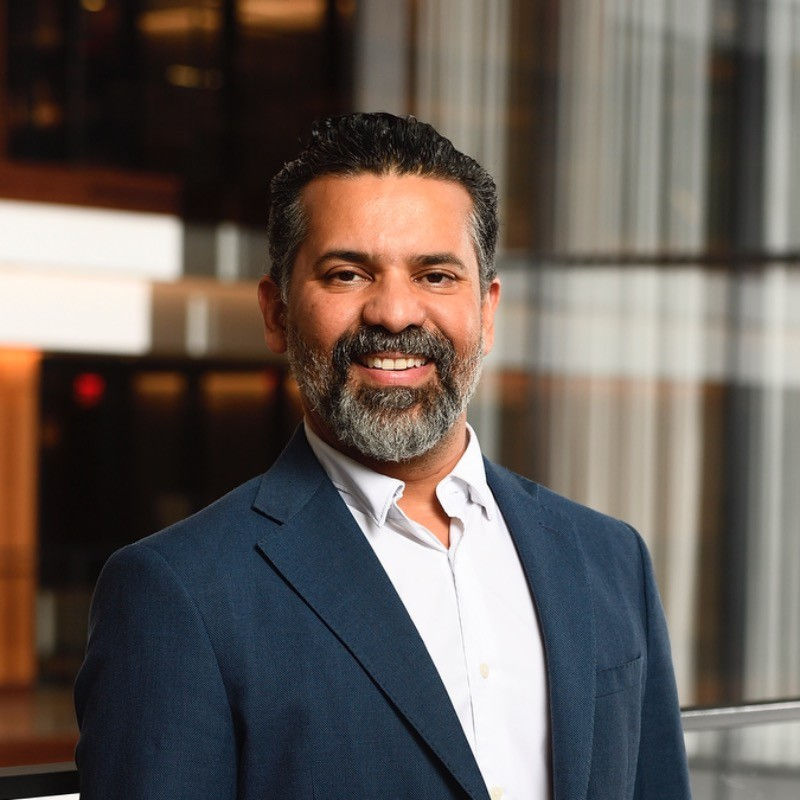
Science, Autocracy, and the Long Game: An Interview with Robert McDonald


Ahead of his session at the National Sustainability Society conference, Cristy Watkins sat down with Robert McDonald — researcher at The Nature Conservancy — to talk about the paper he co-authored on the rise of autocracy and its effects on sustainability science, academic freedom, and evidence-based policymaking (McDonald, R.I., Haase, D., Elmqvist, T. et al. Uncharted political waters for sustainability. Nat Sustain 9, 180–182 (2026).
Catch Rob and colleagues in Session 9E, Wednesday August 18th, 9am: Rising Autocracy and Sustainability: Where do we go from here?
What Drove This Work?
Cristy: What made you and your co-authors decide to write this paper now? Was there a specific event, policy shift, or personal experience that pushed you to move from research to this more direct call for action?
Rob: It started with colleagues from the US and colleagues from Europe. Obviously, in the US there was a big focus on the second Trump administration and some of the moves against different universities — issues around academic freedom and funding for science. But for those of us sitting in Europe, part of what we wanted to do was look at what's happening globally.
I work with colleagues at Central European University, an institution with a well-documented history of being ousted from Hungary by the Orbán regime. There are a number of governments in Europe, in Latin America, and other regions that are also swinging in a more autocratic way. So, the piece was really trying to figure out: what are the political scientists saying about this trend toward autocracy, and how it affects things like academic freedom and the ability to give scientific input in an impartial way to decision-making?
Then we wanted to compare what the political scientists knew with what those of us who work on sustainability science know — including publications on these topics, but also policymaking and these big environmental treaties — and understand the correlation between those things. If the world keeps trending in a more autocratic direction, why might that be problematic for issues like academic freedom or evidence-based decision-making? And what might that mean for big environmental treaties, like the UNFCCC or the CBD?
That was the context — to step back a little bit from the day-to-day of what was happening in the US and think about this from the perspective of sustainability science globally.
The Autocracy-Sustainability Connection
Cristy: You argue that sustainability scientists "can't simply carry on and keep our heads down." Can you walk through the evidence you found connecting the decades-long retreat from democracy to environmental degradation? What's the mechanism — is it defunding, loss of academic freedom, dismissal of scientific advice in policymaking, or something else?
Rob: Maybe we should start with the positive side of the story first. There were several decades, roughly from the '70s to the 2010s, of increasing democratic governance and higher scores on these metrics of academic freedom and scientific engagement in policymaking, in many countries around the world. These indices are rigorously constructed — panels of experts for each country get together with scorecards of dozens or hundreds of different scores, and you aggregate those into a synthetic score of how well academic freedom is doing [at a country level].
That period of increasing democratic governance, increasing scientific participation in decision-making, increasing academic freedom — that coincides, roughly, with the birth of the modern environmental movement. In the US: the first Earth Day, the Endangered Species Act. It was a time of a lot of environmental damage, but also a lot of interest in safeguarding the environment, and a lot of the major environmental treaties globally came out of that Rio treaty period.
You can understand why there's a link — there was this conception that the environment was a global entity that could be hurt by human actions, and we have to work together as a community of nations to safeguard it. And furthermore, if there's this objective entity that we can all measure, we're going to go out, as a kind of global, collaborative, scientific effort, and try to measure the health of the environment. You see things like the IPCC being formed to support the UNFCCC, or IPBES being formed to support the Convention on Biological Diversity.
That's the positive side.
Then, from 2010 onward, there's been this slide. We're not by any means back where we were in the '70s, but it's consistent across most regions that there's a rise in populism and autocracy and centralization of power that has, on average, not been good for academic freedom or for science-based decision-making. It is frustrating to see movement in some of these international treaties now — when you have major players like the US stepping away, not just from new commitments on climate change, but pulling out of the treaty entirely, and even questioning the science behind climate change, which is now extremely settled.
It [backsliding] punctures this way we had of operating — collective scientific effort, an objective view of the world, and a community of nations coming up with a solution. That's where we find ourselves.
In the paper we weren't trying to speak to where governance is going globally — that's a much broader conversation, and one I might care about as a citizen. We were trying to say, for sustainability scientists and environmental policymakers: what will it mean if this trend continues, and what might some of our responses be?
We did argue that there's a time and a place for institutions and people to keep their heads down. There are moments when difficult decisions do have to be made. But what happens when everybody does that is it becomes easier for autocrats to roll back academic freedoms. I see this even in conversations with US colleagues in academia now — a kind of self-censorship. People know: if I use this terminology now, it's problematic for getting NSF grants, it's problematic with my provost, or with the climate at my university, so I'll avoid these terms. And if everybody does that, we as academics — or researchers — have given up an important part of academic freedom.
Lessons from Abroad
Cristy: The opinion paper takes a global view. What did you learn from looking at this trend across different countries? Any cautionary tales or stories of hope?
Rob: I think there's definitely bright spots. Before I get to them:
Our NSS conference session is meant to be much more about the experience in the US - the experience of the people who'll be at your conference. We're hoping to run this session and have a space for people to talk and listen and learn from what's happening in the US.
Two bright spots. One, in Hungary, under Viktor Orbán, there was a series of decisions to crack down on academic freedom. Central European University in particular was picked on, since it's funded by outside donors and critical in some ways of his regime. They moved most of the university to Vienna — that's how far along things got — but they still owned these old, beautiful buildings in Budapest and still controlled them.
I happened to be in Budapest just a few months ago, and Viktor Orbán was voted out of power. It was really heartening to be at Central European University watching professors coming back, people thinking about what it would be like to teach again in that space after being in Vienna for several years. It's not going to be easy — faculty have moved, they have lives now in Vienna, it'll take years to transition back — but they're definitely coming back. To me, that was a really positive story.
And two, in the US, obviously my colleagues are dealing with a bunch of challenges right now.
But there've also been little acts of resistance that I think are really important –
– ways that government datasets were safeguarded and made available by private actors, for instance, when it became apparent that agencies might pull down things like climate data. Or attempts, even by local congressional leaders, to salvage institutions that are really important for climate research, like NCAR, when they faced potential defunding. There's a lot of good NGOs in the US working on maintaining funding for science, for science-based decision-making. All those little actions are really positive, and you have to keep them in mind alongside the challenges — a lot of scientists getting let off the federal payroll, a big
cut in NSF funding, or USAID funding.
Cristy: I love highlighting those bright spots. A couple weeks ago I interviewed Sharon Collinge from Arizona State University, who was a lead chapter author for the Nature Record. The whole endeavor was supposed to be funded by the government, and they lost the funding — so the authors got together and said, nope, we're going to figure out how to fund this thing ourselves. And they did. She said it was incredibly hard, independent of the funding issue, but it was one of the highlights of her career.
Rob: That's such a powerful example.
Professional Risk and Courage
Cristy: Some scientists — and even entire organizations — are worried about retaliation, defunding, or intimidation for speaking out, while others have become more vocal advocates. How do you think about that tension personally, and what would you want an organization like NSS to do differently?
Rob: There's an idea I want to flag first — a tangent, but I'll circle back.
I've noticed a pattern where people say, ‘This small step is just symbolic, it only helps a little, it doesn't solve the whole problem, therefore I won't bother.’ And then they end up doing nothing, because they're not empowered to solve the whole problem by themselves. That's really a recipe for being disempowered.
I want to tell a story that inspired me, and I want to be humble and clear that I'm in no way comparing anything I've done to it. When I was younger, I read the biography of Václav Havel — he became the first president after Czechoslovakia stopped being communist and became democratic. He was a playwright, an academic, and a teacher. He got famous because of something called the Charter 77— a set of writers and artists signing a charter arguing for more academic and artistic freedom under communist rule. Famously, Milan Kundera, one of the more famous Czech authors, didn't sign it [he was already in exile in France by 1977] and his attitude was reported to be like, "You're all just going to go to jail — what's the point?" And sure enough, almost all the writers and artists who signed it were fired and went to jail.
To be clear about where we're at in the US — no one's going to jail here for saying something controversial, whereas in Communist Czechoslovakia, you could. But the point Havel was making is: they didn't know it wasn't just symbolic. In the end it became part of a snowball effect that toppled that government. It took more than ten years, and Havel ended up becoming president in part because he was one of the people who wrote Charter 77 — and at the time he did that, he had no idea where it would end up.
It's a powerful story: you don't know where little symbolic things end up.
On the tension itself — I think there's an equity piece to this that's real.
Different people are in really different spaces about what they can do and their freedom to speak, and we have to be respectful of that.
We actually started writing this piece with a number of Americans involved, and they mostly dropped off — even Americans at US universities felt uncomfortable, and certainly many NGO staff felt uncomfortable signing on. If you look at who stayed on the piece, it was mostly Europeans, and people who were already tenured professors — people who have a lot of safety. You see that pattern in the US too: someone like Michael Mann can still speak out strongly about climate change, but he also has a degree of protection. I know folks who still work for federal agencies who are much more quietly talking about this, or writing anonymously, because they want to keep their jobs and keep doing what they see as good environmental work. I have to respect that decision too.
There's also a distinction worth naming: in this interview, I'm giving my own opinion as a researcher, not necessarily speaking for The Nature Conservancy. I feel really lucky to work at an NGO that prides itself on being science-based — we were founded by members of the Ecological Society of America who wanted to protect biodiversity, and we have a written code called Scientific Freedom and Responsibility. It means we as scientists can write papers and share our own opinions, as long as we're clear about when we're presenting the organization's advocacy position versus our own. TNC operates in more than 80 countries and all 50 states, so the actions of an institution like that play out very differently across a lot of different spaces.
Cristy: If a junior researcher asked you whether it's "safe" to work on politically sensitive sustainability topics right now, what would you actually tell them?
Rob: That it is a little dangerous, but a little fun... I want to be fair about the danger part — there are people working on specific grants, or who are very junior in a federal agency, who may feel really constrained in what they can say or do, and I want to be respectful of that. At the same time, I think it's helpful to remember that this isn't like the situation in many Latin American countries, where environmentalists and environmental reporters get killed or disappear. We're not talking about that. For the most part, young researchers are talking about the risk of losing grant funding, not getting a position they wanted, or not getting promoted.
What I mean by "fun" is —
This piece has been one of the most invigorating things I've done in the past couple of years. I've met a lot of new people, started talking about these issues, and it's good to not feel alone.
I also think if you take a longer-term view, things come and things go. If someone at the start of their career stands up for something they believe in, it may be a little dangerous in the short term, but longer term it might open new doors, or at least new interactions in the world, that you might not have had otherwise.
But I also don't think you take these small actions because you're certain they're going to be helpful. Going back to Havel — they didn't write Charter 77 because they were sure it was going to work. They did it because it felt like the right thing to do.
And I do feel like we're starting to get into that space. I've talked to university professors who've said, "I was asked to stop lecturing on climate change," and at a certain point you hope they say: no, I'll put my foot down. They tell their administration that it is wrong to censor their course content, even if there's some risk within the department, or politically.
Community Conversation and Advice to Junior Researchers
Cristy: The urgency for action is clear, but the path forward feels less so. At the NSS conference, you, Diane, and Janna will hold a session meant for open discussion. What is your goal for the session — are you looking to share information, arrive at shared prescriptive actions, or something else?
Rob: I want to have a really robust discussion about both the problem — this rise in autocracy and how it might be impacting sustainability science for the people in the room — and then also talk about some solutions, in a local, grounded way, for the problems people are encountering in their everyday work and lives. What are some small things we can do together? We are hoping to take what comes out of that discussion and work with NSS leadership to think about what the organization's position will be — understanding that the sense in the room in one session isn't going to fully determine what NSS's overall position or actions will be.
Cristy: If you had to name two or three concrete things a sustainability researcher, educator, or practitioner could actually do differently starting this year, what would they be?
Rob: One thing I'd bring into the session discussion, specifically, is to keep the conversation about us: about our own experiences and what we can actually do. I find that when you engage researchers or academics on this topic, they start thinking about the whole big structural problem –
You can quickly get into a space where it feels like you can't do much. But there's another way you can go: think about it as a community of researchers.
What are the major funding sources for sustainability science in the US right now, and what's happening with them? How do we fill the gap if government funding isn't there, so the research still happens? What datasets have we historically relied on from the federal government or the states — what do we do if those aren't there anymore, or if we have concerns that they're not being conducted as fully as before?
Those are the kinds of questions that connect to people's own experience.
The NSS Annual Conference
Join hundreds of cross-sectoral sustainability professionals as they share their work that champions evidence-based research, innovative and accessible solutions, and the persistence and preparation essential to building a hopeful and resilient future.
Inspiring plenaries, symposia, roundtables, posters, workshops, professional development courses, fun leisure activities, and networking opportunities await.
The conference will be hosted by Colorado State University's School of Sustainable Futures and the CSU Climate Hub at Spur.